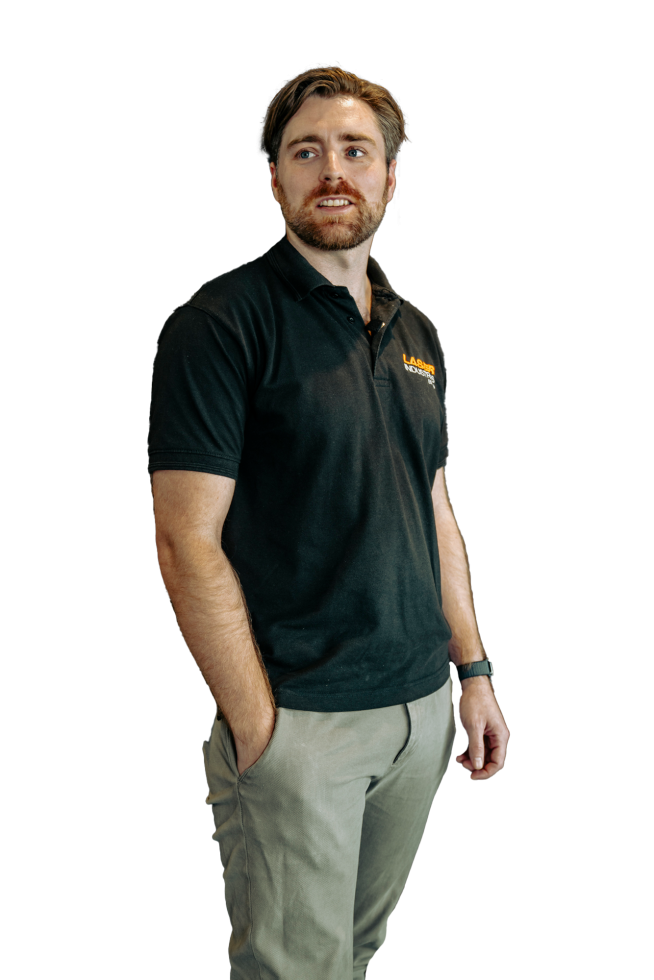
In the sheet metal processing business, twenty minutes can mean the difference between winning and losing. At Laser Industries in Plymouth, Billy Biddiss has built the employees owned company’s reputation on a promise that once seemed impossible to keep.
If you click on the application, a request with your IP address will be sent to an external provider.
Joint director, Billy Biddiss, has seen the competitive landscape transform during his nearly 12 years with the firm. "There are three or four companies doing exactly the same thing as us within a two-hour drive," he explains. "It's very competitive, and we always have to keep our ear to the ground."
Founded in 1999, Laser Industries serves everyone from aerospace giants to one-man fabrication shops across marine, construction, automotive, and other sectors. With 23 employees, the company has doubled its revenue over the past five years – not by expanding headcount, but by working smarter. “We’ve really pushed the bending side of the business, whereas before we were primarily just laser cutting,” says Biddiss.
The paper mountain problem
But growth brought challenges. The company’s sales and production systems ran in complete isolation, creating what Biddiss calls “mountains of paperwork.” Every order generated in the sales office had to be manually re-entered by the production team. “They were picking up parts individually, entering quantities individually just to generate a program for the machines,” he recalls. A single nest could take anywhere from five minutes to half an hour to produce.
For larger jobs with hundreds of sheets, the process was excruciating. “It was a very laborious task to calculate how long that would take to cut,” Biddiss admits. Worse still, manual processes meant human error was inevitable – wrong parts nested, incorrect components picked. And in a business where customers demand quotes within hours, not days, speed matters. “If you’re taking one of those days just to get the price back, you’re already on the back foot,” he says.
From three shifts to two – with more output
The solution came through complete digital integration. Laser Industries implemented BySoft Business and BySoft Shop Floor, creating a seamless link between sales and production. Now, when a customer accepts a quotation, a single button press fires the order across to production – materials, quantities, and thicknesses automatically included. “They can just pick up as many parts as they need to generate a nest and send it out to the machine, again at the press of a button,” explains Biddiss.
We’re getting the same work, if not more, done in those two shifts compared to what we were in three.
The impact was immediate and measurable. Human errors dropped by roughly 75%. Material waste decreased by approximately 20%. Paper usage – once overwhelming – fell to a fraction of previous levels. Most remarkably, the company condensed operations from three shifts down to two (6am-2pm and 2pm-10pm) while increasing output. “We’re getting the same work, if not more, done in those two shifts compared to what we were in three,” says Biddis. “Which speaks for itself, I think.”
The 20-minute advantage
Perhaps most critically, quoting speed transformed from a weakness into a competitive weapon. “Before, if a customer rang and said ‘I need my quote back in 20 minutes,’ we didn’t know until we sat down whether we could or not,” Biddiss recalls. “Whereas now I can confidently say to people, yeah, we can get that back to you.”
That confidence translates directly to the bottom line. Customer feedback confirms what Biddiss suspected: “Often, it is whoever gets their price back first will win the job, even if the cost difference is marginal.” The company now returns nine out of ten quotations within their target timeframe – and they’re working toward ten out of ten.
Live data visibility has proven equally valuable. “We can see quite clearly how many hours the machines are cutting, how many hours they’re sat idle,” says Biddis. “That gave us the information to see where we could improve” – insights that enabled the shift consolidation.
One source, zero data re-entry, complete confidence
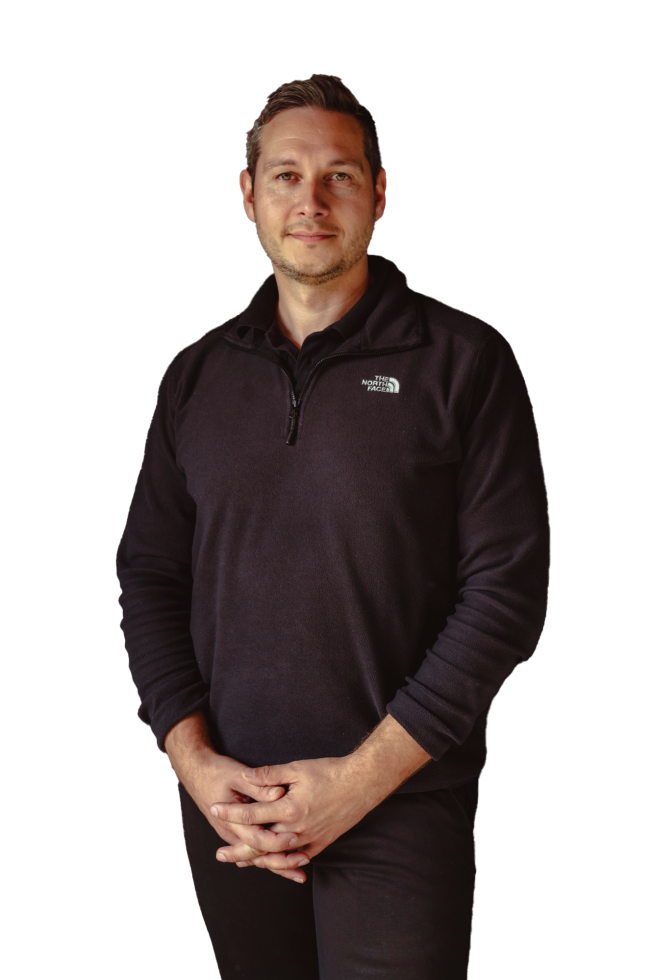
Peter Horne, Bystronic's Software Consultant , has worked closely with Laser Industries throughout their digital transformation. Having spent considerable time on site, he's witnessed firsthand how the integrated solution has changed daily operations—and the team's confidence in taking on new challenges.
"The transformation is remarkable. Where the team once juggled multiple software systems and re-entered the same data at every stage, they now work from a single, reliable source. Information flows automatically from the initial quote straight through to the laser and back again—no manual handoffs, no data discrepancies.
What I see on site is a team that moves faster and with real confidence.
They can pivot quickly when customers change requirements, take on complex new projects, and deliver exactly what they promised. Every department speaks the same language now because they're all looking at the same information. That's translated directly into more consistent service and stronger customer relationships."
Built on partnership
For Laser Industries, the digital transformation represents more than new software. Having worked with Bystronic machines since before Biddiss joined the company, the relationship runs deep. “We’ve just never seen the reason to change,” he says. “The machines are fantastic, we’ve got a good relationship with the sales and service teams, and now we’re Bystronic from start to finish.”
As the company completes its transition to employee ownership – a five-year process that makes all 23 employees stakeholders – that integrated efficiency becomes even more valuable. In a competitive market where speed and accuracy determine success, Laser Industries has found its edge: the ability to quote in 20 minutes, deliver in three days, and do it all with 75% fewer errors. That’s a formula for growth that goes far beyond adding headcount.